7 Signs Your AC Needs Repair (Before It Dies Completely)
Your air conditioner usually warns you before it fails. Here's what to watch for.
Air conditioners rarely die without warning. They give you signs—subtle at first, then more obvious. The trick is paying attention before a small problem becomes an expensive emergency on the hottest day of July.
Boise summers push AC systems hard. When temperatures hit triple digits, your unit is working overtime. Any underlying issues get amplified under that strain.
Here are seven warning signs that your AC needs attention. Catch these early, and you're looking at a repair. Ignore them, and you might be shopping for a new system.
1. Weak or Warm Airflow
The air coming from your vents should be cool and strong. If it's barely trickling out or feels warmer than it should, something's wrong.
Could be a clogged filter restricting airflow. Could be a failing blower motor. Could be low refrigerant. Or it could be ductwork problems, especially if some rooms get good airflow and others don't.
Start with the simplest fix: check your filter. If it's clean and you're still having issues, it's time for a professional diagnosis.
2. Strange Noises
Your AC makes some noise when it runs—that's normal. But new sounds or louder-than-usual operation means something's changed.
Grinding or screeching often indicates motor bearing problems. The bearings are wearing out, and if ignored, the motor will eventually fail.
Banging or clanking suggests something loose inside the unit—a broken fan blade, loose mounting hardware, or debris that got into the system.
Hissing can indicate a refrigerant leak. Refrigerant shouldn't escape from a healthy system.
Clicking at startup and shutdown is normal. Constant clicking during operation is not—usually points to electrical problems.
3. Your Energy Bills Spiked
Yes, your electric bill goes up in summer when you run the AC more. But if it jumped significantly compared to the same time last year, your system might be struggling.
An AC that's losing efficiency has to work harder to achieve the same cooling. That extra work shows up on your bill. Common culprits include dirty coils, low refrigerant, or an aging compressor that's not performing like it used to.
Compare bills year-over-year if you can. Idaho Power can usually give you historical usage data. A 20-30% increase with similar weather and habits suggests your equipment needs attention.
4. The System Runs Constantly
On the hottest days, your AC might run for extended periods. That's normal. But if it never shuts off—or runs all day just to maintain temperature—something's off.
A properly sized, well-functioning AC should cycle on and off. Continuous operation usually means the system can't keep up with the cooling load. Maybe it's undersized for your home. Maybe it's low on refrigerant. Maybe it's simply worn out.
Whatever the cause, a system that runs nonstop costs more to operate and wears out faster. It's trying to tell you something.
5. Short Cycling
Short cycling is the opposite problem—the system turns on, runs briefly, shuts off, then starts again minutes later. Over and over.
This is hard on your equipment. Each startup draws significant electrical current and puts stress on the compressor. Systems that short cycle don't last as long.
Causes include a thermostat in a bad location (near a sunny window or heat source), refrigerant problems, electrical issues, or an oversized unit. A technician can diagnose which applies to your situation.
6. Water or Ice Where It Shouldn't Be
Water pooling around your indoor unit usually means a clogged condensate drain. The AC removes humidity from your air, and that moisture needs somewhere to go. When the drain clogs, water backs up.
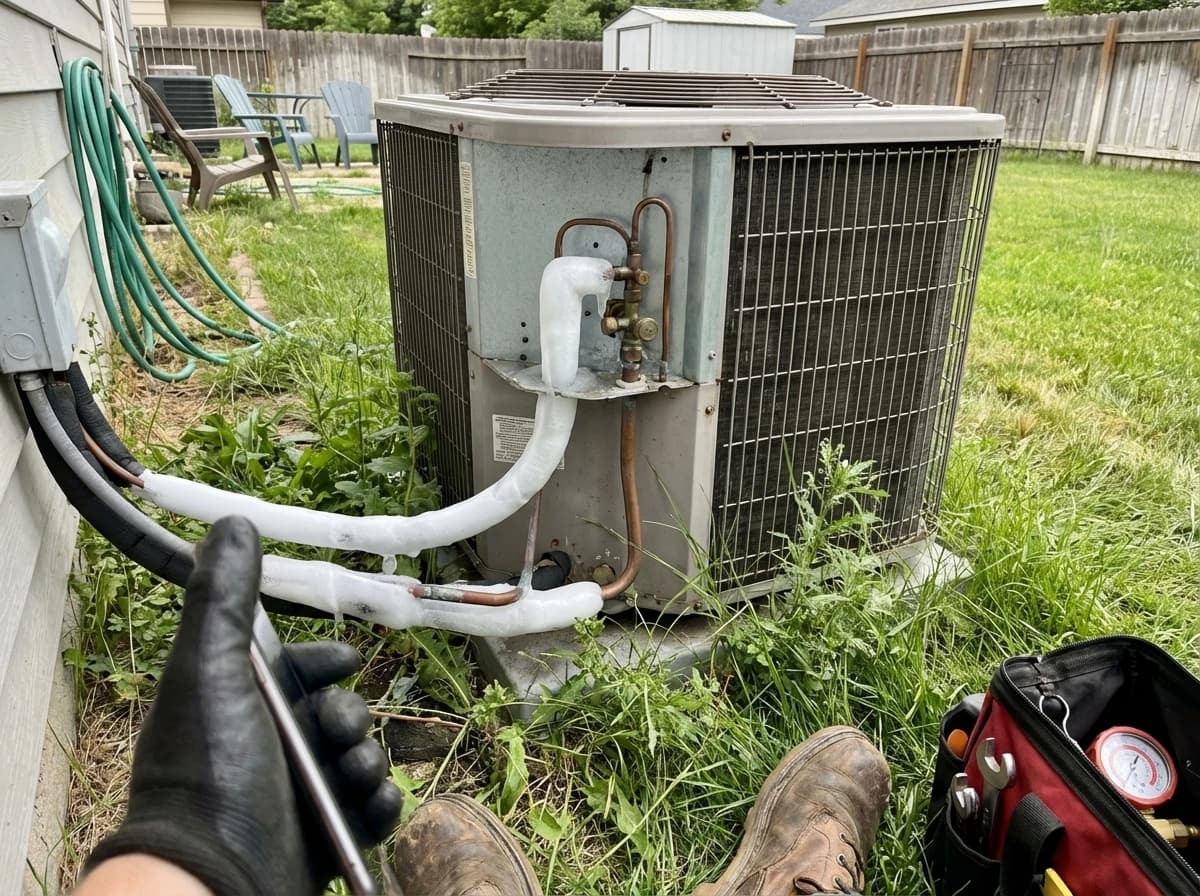
Ice on the refrigerant lines or evaporator coil is a bigger problem. It typically indicates low refrigerant, restricted airflow, or a failing component. Your AC shouldn't form ice under normal operation.
If you see ice, turn the system off and let it thaw. Running an iced-up AC can damage the compressor—and that's an expensive repair.
7. Unusual Smells
Your AC shouldn't produce noticeable odors. If it does, pay attention to what you're smelling.
Musty or moldy smell suggests biological growth somewhere in the system—often in the ductwork or on the evaporator coil. Besides being unpleasant, this can affect indoor air quality.
Burning smell is more urgent. Could be an electrical problem or a motor overheating. Turn off the system and call for service.
Rotten egg smell (if you have gas appliances nearby) could indicate a natural gas leak. That's an emergency—evacuate and call your gas company.
When to Call for AC Repair in Boise
If you notice one of these signs, don't panic—but don't ignore it either. Most AC problems are easier and cheaper to fix when caught early.
The worst time to discover you need AC repair is during a heat wave when every HVAC company is slammed. Schedule a check-up before peak summer if something seems off.
The Bottom Line
Your AC talks to you through these warning signs. Weak airflow, strange sounds, higher bills, constant running, short cycling, water or ice issues, and unusual smells all mean something's not right.
A repair now is almost always cheaper than an emergency replacement later. And it's definitely more comfortable than sweating through a Boise summer while waiting for a new system to be installed.
Listen to what your AC is telling you. When it starts complaining, it's probably time to call someone who speaks the language.
AC Acting Up?
Don't wait for a complete failure. We'll diagnose the problem and give you honest options.